
The Kansas Inmate Population
Kansas uses more than one custody system, so the Kansas inmate population cannot be read from one roster. County sheriffs maintain local jail custody for new arrests, pretrial detainees, municipal holds, warrant holds, and many short local sentences. The Kansas Department of Corrections, usually abbreviated KDOC, maintains the state prison population and the statewide KASPER offender population search for sentenced state custody, post-incarceration supervision, parole, absconders, and discharged KDOC sentences. Federal prisoners are outside KDOC. Immigration detainees are outside KDOC unless another state sentence exists. Court records are also separate because a filed case can exist after a person has bonded out, transferred, or completed custody.
KDOC's Daily Population Report generated May 7, 2026 for May 6, 2026 showed 9,800 total inmates in KDOC and non-KDOC facilities. That figure counted 8,918 male inmates and 882 female inmates. It also separated 9,788 people in KDOC facilities from 12 in non-KDOC facilities. The same research file confirms that all 105 Kansas county folders exist for the local jail layer, which lets this statewide apex route users down to every county subdomain with the placeholder domain format required for launch.
The Kansas Department of Corrections home page is the statewide entry point for KDOC information, KASPER, population reports, facilities, victim services, reentry, and records-request resources.

The KDOC home page matters because state prison search, state population reports, and state corrections records sit apart from county jail rosters.
Kansas Inmate Population Statistics
The strongest detailed prison-population figure in the Kansas research is the May 6, 2026 KDOC daily count. KDOC's separate Current Population Totals page, last modified February 27, 2026 and marked updated September 18, 2025, listed adult correctional-facility population and capacity at 9,849 / 10,674. The same table listed 8,974 / 9,738 male adult facility population and capacity, 875 / 936 female adult facility population and capacity, and 5,357 adult parolees. Those figures do not replace the county jail count. They describe KDOC adult facilities and parole. County jail rosters remain local, and the research does not provide one combined daily jail population for all Kansas counties.
| Measure | Figure | Source and Date |
|---|---|---|
| KDOC and non-KDOC inmate total | 9,800 | KDOC Daily Population Report, May 6, 2026 |
| In KDOC facilities | 9,788 | KDOC Daily Population Report, May 6, 2026 |
| Adult correctional facility population / capacity | 9,849 / 10,674 | KDOC Current Population Totals, September 18, 2025 table |
| Adult parole population | 5,357 | KDOC Current Population Totals, September 18, 2025 table |
| County locality folders | 105 | Statewide Kansas research roll-up |
The KDOC Current Population Totals page provides the capacity cross-check used for statewide Kansas inmate population context.
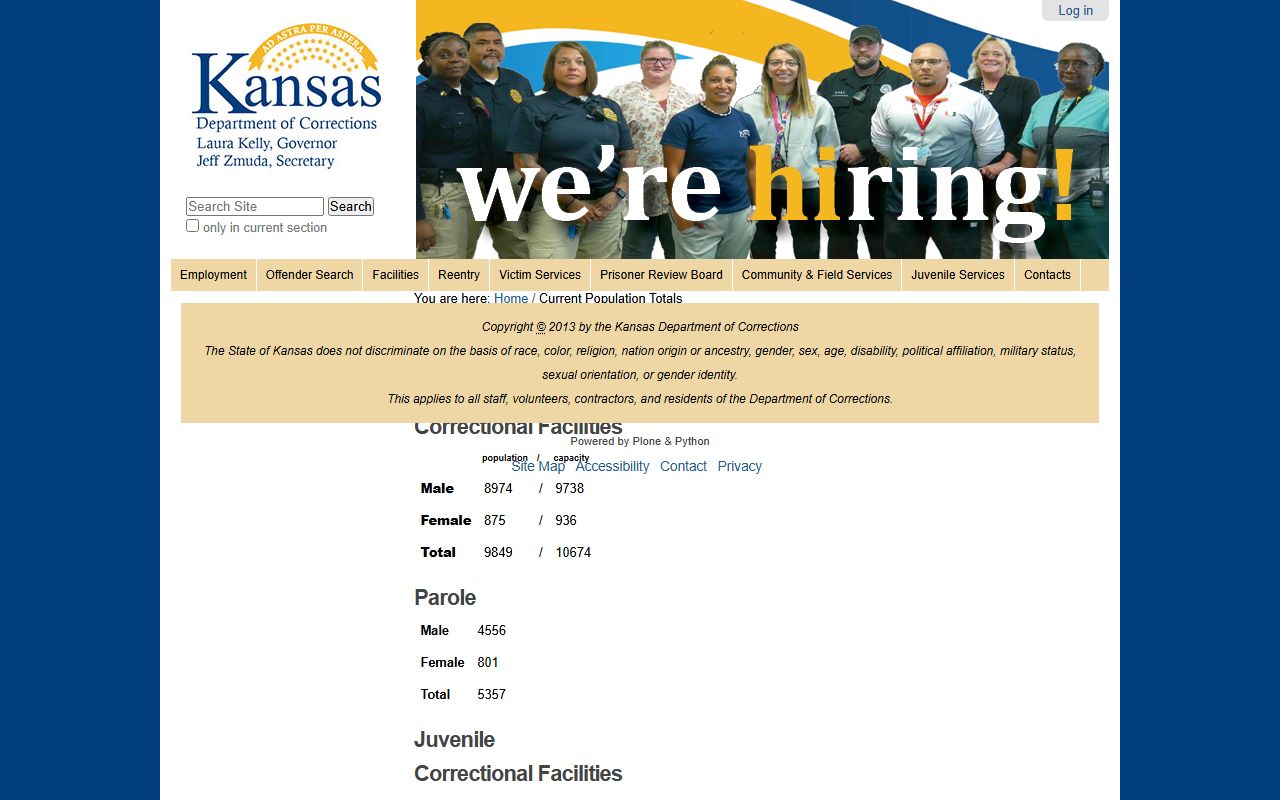
Capacity figures help readers separate a daily prison count from the number of beds KDOC reports for adult correctional facilities.
Kansas Inmate Population Trends
Kansas prison population trend copy should use exact dates. The Daily Population Report's summary showed the end-of-April 2026 total at 9,802. That was up 125 over the prior 12 months and up 75 from July 1, 2025 through April 30, 2026. The current-population dashboard was useful but older, because its visible table was marked updated September 18, 2025. Both sources point to a statewide prison system that should be described with dated figures, not a vague claim that the Kansas inmate population is rising or falling.
| Period | KDOC Figure | What It Means |
|---|---|---|
| May 6, 2026 | 9,800 total inmates | Daily report count for KDOC and non-KDOC facilities |
| End of April 2026 | 9,802 total inmates | Report summary figure used for trend comparison |
| Prior 12 months to April 2026 | Up 125 | KDOC report's 12-month trend |
| July 1, 2025 to April 30, 2026 | Up 75 | KDOC report's fiscal-year-to-date trend |
The KDOC facilities map shows why trend figures are statewide rather than county-specific.
State prison beds are distributed across Kansas, so a person sentenced in one county may later appear at a facility in another county.
Kansas Inmate Records by Custody
The Kansas inmate population includes different groups with different search paths. A booking into Sedgwick, Johnson, Wyandotte, Shawnee, Douglas, Leavenworth, or a rural county jail is normally searched through that sheriff's roster or a local jail information line. A sentenced KDOC resident is searched through KASPER. A federal prisoner is searched through BOP. A person in immigration detention is searched through ICE ODLS and the facility or operator path. A court case is searched through Kansas courts. One name can appear in more than one system over time, but the record type changes as the case moves from arrest to booking, charging, sentencing, transfer, supervision, or release.
Custody split: KASPER is the KDOC offender population search, not a universal Kansas jail roster. Kansas VINE is specific to county jails and does not include KDOC state-prison offenders.
- KASPER
- Kansas Adult Supervised Population Electronic Repository, the KDOC offender population search.
- County jail roster
- A local sheriff or jail list for people booked into that county's custody.
- Detainer
- A hold or notice from another agency that may affect release or transfer.
- Postrelease supervision
- Kansas supervision after the prison portion of many post-guidelines sentences.
Kansas Inmate Records Law
Kansas public-records access is governed by the Kansas Open Records Act, usually called KORA. K.S.A. 45-215 starts the statutory article. K.S.A. 45-216 states Kansas public policy that public records are open for inspection unless another law says otherwise. K.S.A. 45-218 requires public agencies to act on records requests as soon as possible, but not later than the end of the third business day after receipt. That does not mean every jail or prison record is posted online. It means request paths and exemptions matter.
KDOC provides an online KORA path through GovQA and still accepts written or email requests. County sheriffs follow Kansas public-records law too, but their local systems vary. Some publish a live roster. Some use a vendor roster. Some publish PDF booking lists. Some provide custody information by phone or records request. A statewide Kansas inmate population page should not promise that every county roster has mugshots, bond, housing, release times, or full charges.
Search Kansas Inmate Population
Start with the question the record must answer. Current custody is not the same as a court case, a booking photo, a sentence, or a release date. If the person was arrested today, search the county where the arrest or booking likely happened, then check Kansas VINE if the county participates. If the person has a KDOC sentence, use KASPER. If the case is federal, use the BOP locator. If immigration detention is possible, use ICE ODLS. If the issue is filed charges after arrest, use Kansas Case Search or the district-court records path.
- Decide whether the person is in county jail, KDOC prison, federal custody, immigration detention, or court records only.
- Use the Kansas County Directory for a local jail roster or sheriff contact path.
- Use the KDOC inmate population page and KASPER for state prison custody or KDOC supervision.
- Use BOP for federal custody, ICE ODLS for immigration detention, and Kansas VINE for county jail notifications.
- Use Kansas Case Search when the question is about charges, hearings, filings, or case status after an arrest.
The KASPER disclaimer page is the official entry point for KDOC offender population search.
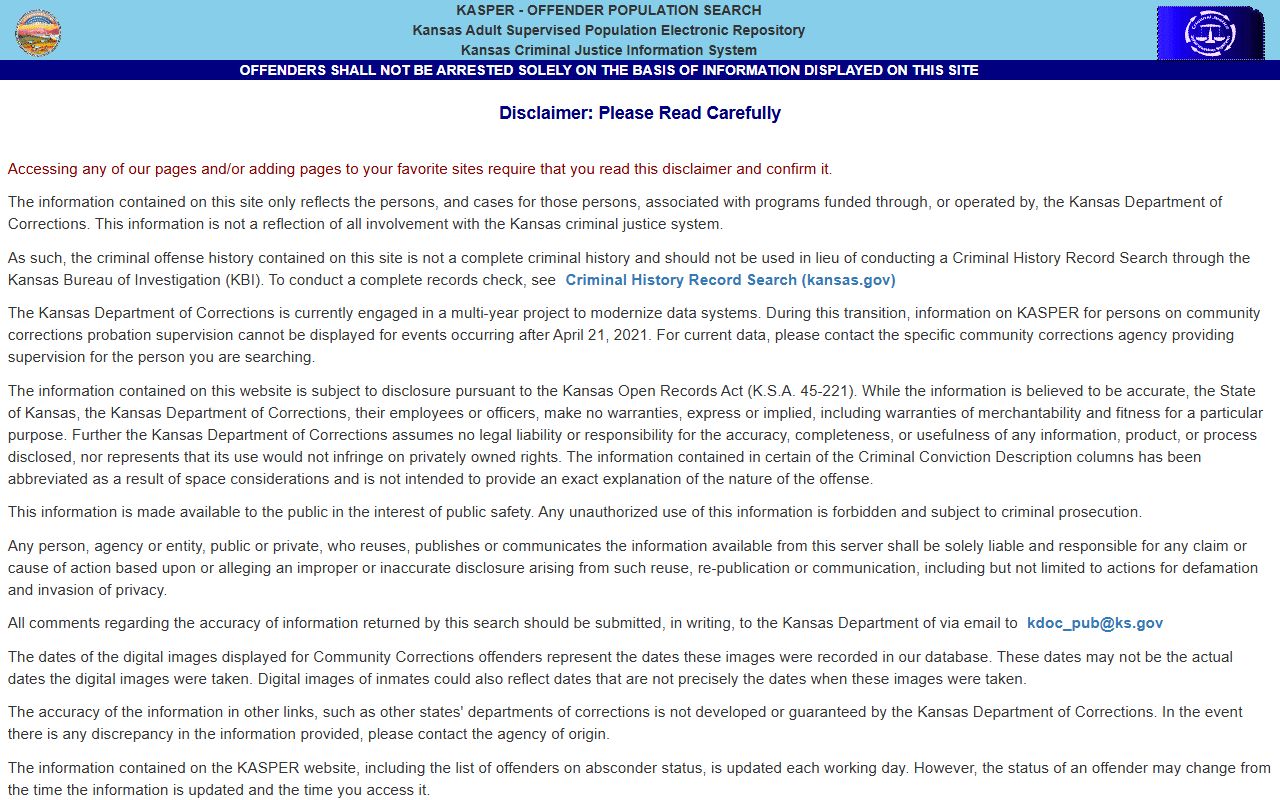
KASPER's disclaimer is part of the search process because KDOC states the scope limits before users reach the search form.
Kansas Jail and Prison Lookup
County jail and state prison records answer different questions. A county jail roster is the first stop for a new booking, a pretrial defendant, a municipal hold, or a person serving a short local sentence. KASPER is the first stop for a person sentenced to KDOC custody, under post-incarceration supervision, or discharged from a KDOC sentence since 1980. Kansas VINE is important because the Attorney General's Kansas VINE page says it is specific to offenders housed in county jails and does not include KDOC offenders housed in state prisons.
| Question | Best Kansas Source | Why |
|---|---|---|
| Was someone booked into jail? | County jail roster or jail phone line | County sheriffs maintain local jail custody records |
| Is someone in a KDOC prison? | KASPER | KDOC maintains state prison and supervision data |
| Can I get custody change alerts? | Kansas VINE | VINE covers county-jail notifications in Kansas |
| Was a criminal case filed? | Kansas Case Search | Courts track charges and case events, not jail custody |
| Is custody federal? | BOP inmate locator | BOP handles federal prisoners from 1982 to present |
The Kansas VINELink state portal supports county jail custody search and notification.
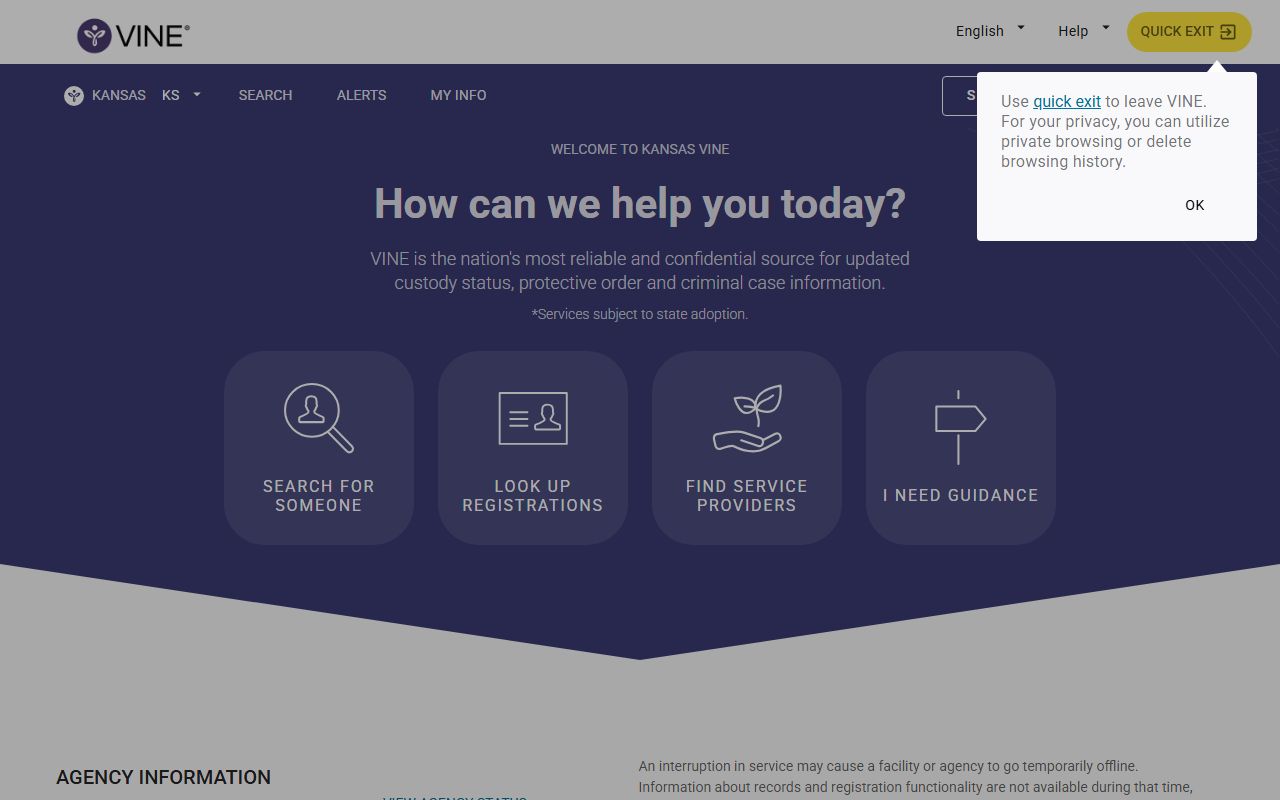
VINE is a useful fallback when a local roster is limited, but it should not be treated as a KDOC prison locator.
Kansas State Federal Court Search
The BOP locator covers federal inmates incarcerated from 1982 to the present. It supports number searches by BOP Register Number, DCDC Number, FBI Number, or INS Number, plus name searches with optional race, age, and sex filters. It matters in Kansas because FCI Leavenworth is in Leavenworth County and federal defendants from Kansas can move out of local jail and out of KDOC systems. ICE ODLS is different again. It is relevant when immigration detention is possible, and county research identifies ICE-relevant Kansas facility contexts such as Chase County Detention Center and the Midwest Regional Reception Center in Leavenworth County.
Kansas court records should be searched through Kansas Case Search and the Kansas Judicial Branch district-court records page. Court case data can show filed charges, hearings, case events, and public documents where available. It is not proof that a person is currently in jail. A charge can be amended or dismissed. A person can be released while the case remains open. A sentence can move the person from a county jail to KDOC.
The Federal Bureau of Prisons inmate locator is the official federal prison search channel.
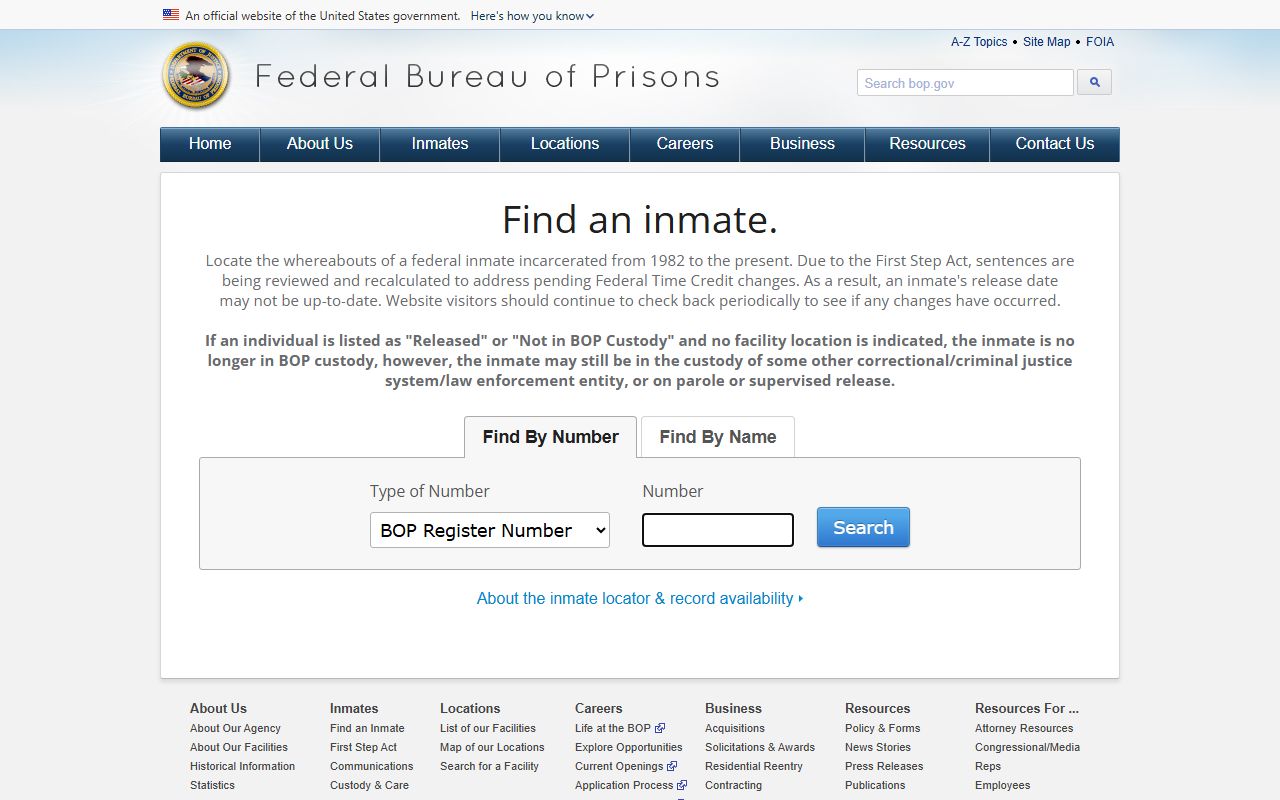
The BOP locator prevents federal custody from being confused with KDOC prison custody or a county jail roster.
The Kansas Case Search portal is the statewide court case search path for public district-court case information.
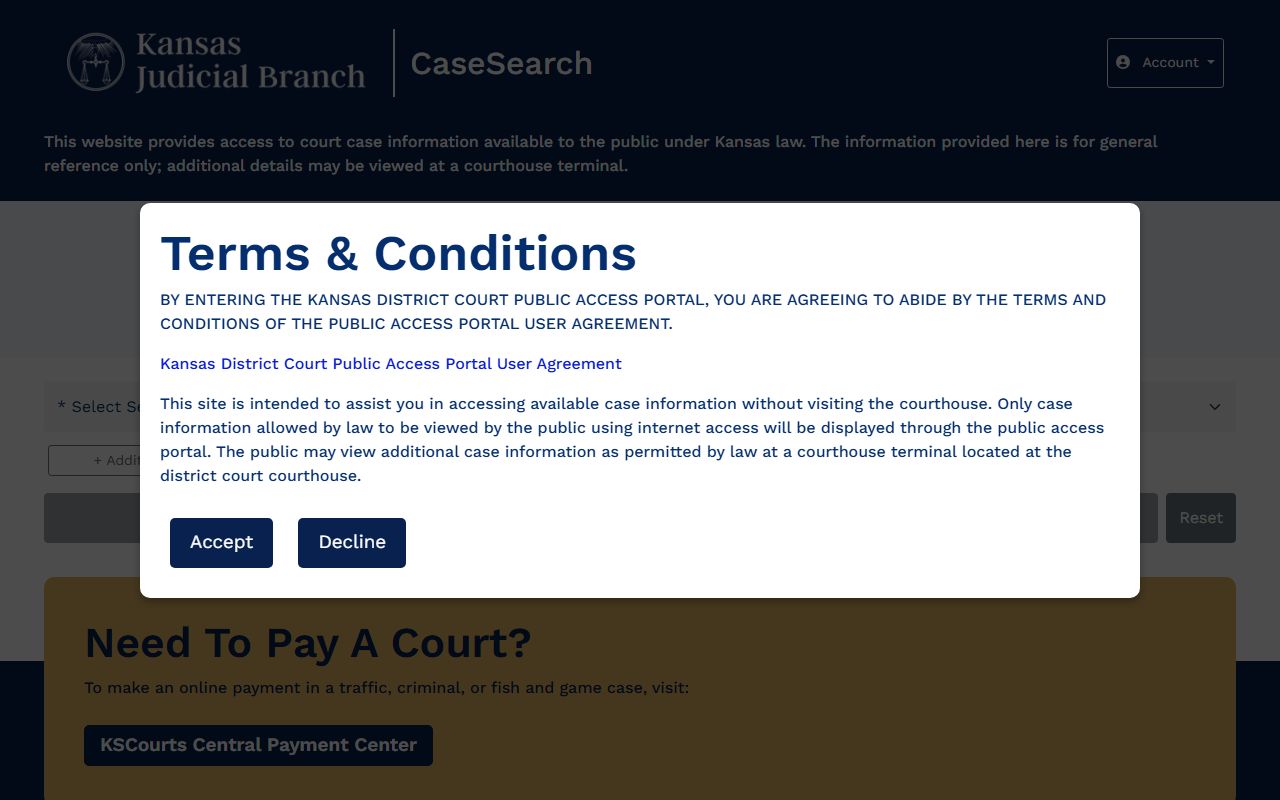
Court search belongs beside custody search because arrest records and court records often diverge after the prosecutor files charges.
Kansas Detention Facilities
Kansas detention facilities include sheriff-operated county jails, local detention centers, juvenile detention rows where the county research documented them, KDOC state prisons, federal and military facilities in Leavenworth County, ICE-related detention contexts, work-release settings, and regional custody routes. The statewide facility directory is not a one-row-per-county list. It preserves rows for facilities such as Central Booking Facility and New Century Adult Detention Center in Johnson County, KDOC prisons such as El Dorado and Lansing, FCI Leavenworth, Shawnee County corrections facilities, and rural regional custody paths where a person arrested in one county may be held in another.
The KDOC adult facility index identifies Kansas state correctional institutions for state-prison routing.
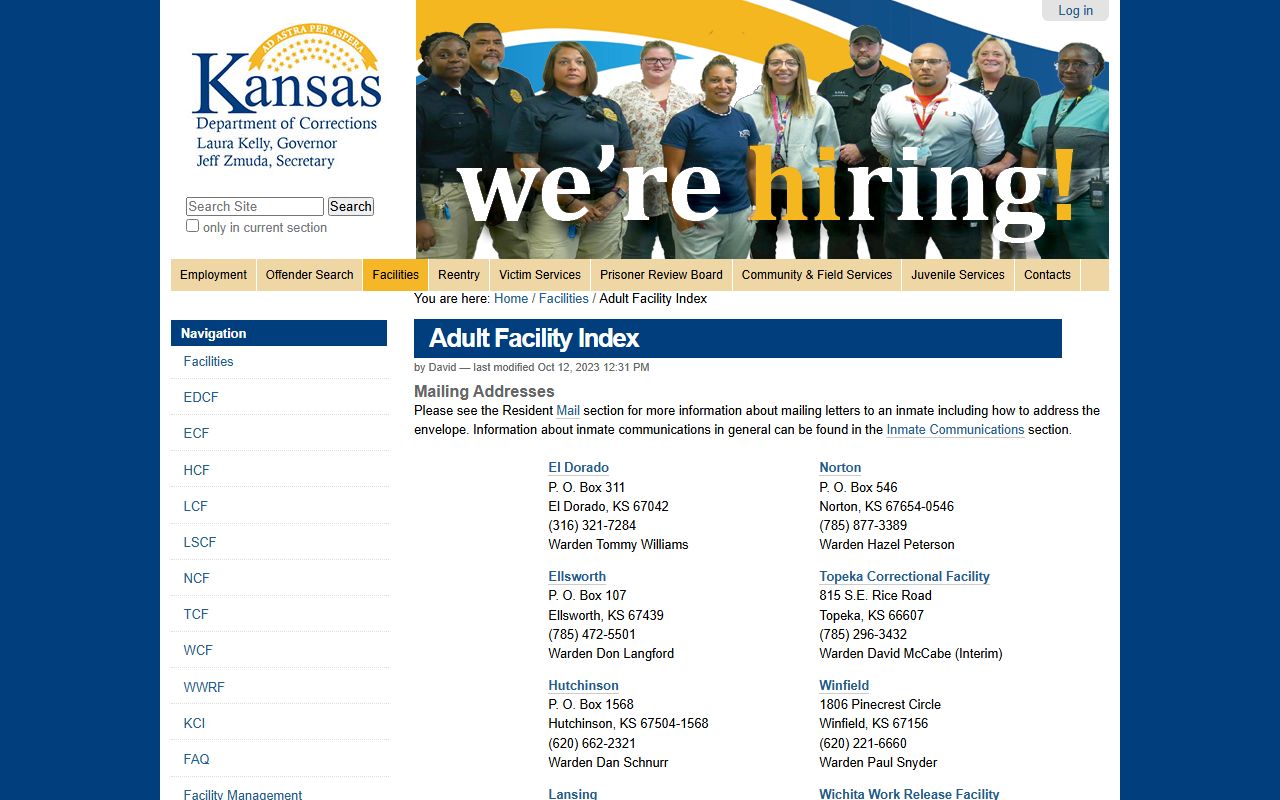
The facility index supports statewide routing because KDOC prisons use KASPER even when they sit inside a county with a separate jail roster.
Kansas Inmate Search Routing
Several Kansas search failures come from assuming that arrest county, court county, and holding facility are always the same place. The statewide research shows a more complex pattern. Gray County points users toward Ford County Jail. Clark and Kiowa research point to Meade County Jail, and Kiowa also documents Pratt and Kingman custody paths. Gove and Logan research document Thomas and Trego regional paths. Barber research documents Russell County Jail as a custody path while Barber's own sheriff office is not documented as an active public roster jail. Those regional notes are not minor details. They explain why a Kansas inmate population search may need both the county directory and the facility directory.
Leavenworth County adds a different kind of routing problem. The county contains the state Lansing Correctional Facility, the federal FCI Leavenworth, the Leavenworth County Sheriff's Office Detention Center, military correctional facilities at Fort Leavenworth, and immigration-detention context around Midwest Regional Reception Center. A search that starts with "Kansas inmate" can therefore mean KDOC, a county jail, BOP, a military correctional system, or ICE-related custody. The correct source depends on the legal authority holding the person, not just the city or county name.
| Kansas Search Problem | Best Next Step |
|---|---|
| The arrest county roster is empty | Check the facility directory for regional custody paths and neighboring jails documented in county research. |
| KASPER shows a conviction county | Use Kansas Case Search for the court case and KASPER for KDOC location or supervision status. |
| A Leavenworth-area result is unclear | Separate county jail, Lansing state prison, FCI Leavenworth, military custody, and ICE-related custody. |
| A county jail record mentions a hold | Check the holding agency, warrant source, court case, VINE, KDOC, BOP, or ICE path as the facts allow. |
Use dated population numbers the same way. The May 6, 2026 KDOC count describes KDOC and non-KDOC prison-system custody, while county jail rosters describe local custody one county at a time. The current-population table marked September 18, 2025 describes adult correctional-facility population and capacity. None of those figures should be blended into a made-up single Kansas jail-and-prison total.
Kansas Inmate Population FAQ
How large is the Kansas inmate population?
KDOC's May 6, 2026 daily report showed 9,800 total inmates in KDOC and non-KDOC facilities. KDOC's older current-population table listed 9,849 adult correctional-facility residents against 10,674 capacity. Those are prison-system figures, not a statewide daily county-jail total.
What is KASPER?
KASPER is the Kansas Adult Supervised Population Electronic Repository. It is the KDOC offender population search for KDOC custody, supervision, parole, postrelease, absconder, and discharge information. It is not a full criminal-history search and not a county jail roster.
Where are county jail inmates searched?
Use the Kansas county directory, then open the county jail roster, sheriff site, or local contact path. Kansas VINE can also help with county jail custody search and notifications, but the Attorney General's VINE page says it does not include KDOC state-prison offenders.
Where are court records after a jail arrest?
Use Kansas Case Search and the Judicial Branch district-court records page for filed court cases. A booking allegation is not the same thing as a filed charge, and a filed charge is not a conviction.
Public Record Search
Sponsored Results