
How Kansas Mugshots Work
Booking photos in Kansas are produced county by county. The photo is usually taken during jail intake, then tied to the jail's booking record. A public roster may display the image next to the person's name, booking date, charges, bond, housing, and custody status. Other counties publish a current roster without images, a daily booking report, a sheriff app feed, or no public photo feed at all.
There is no statewide Kansas county-jail mugshot gallery. The statewide path is routing: identify the county or facility that booked the person, open that county's roster or facility page, then use KORA if the photo is not published online and the record is not exempt. State prison records are different. KDOC uses KASPER for people in state custody or supervision, while county jails control local booking photos.
Use the KASPER offender population search for KDOC records, including state prison custody and supervision information.
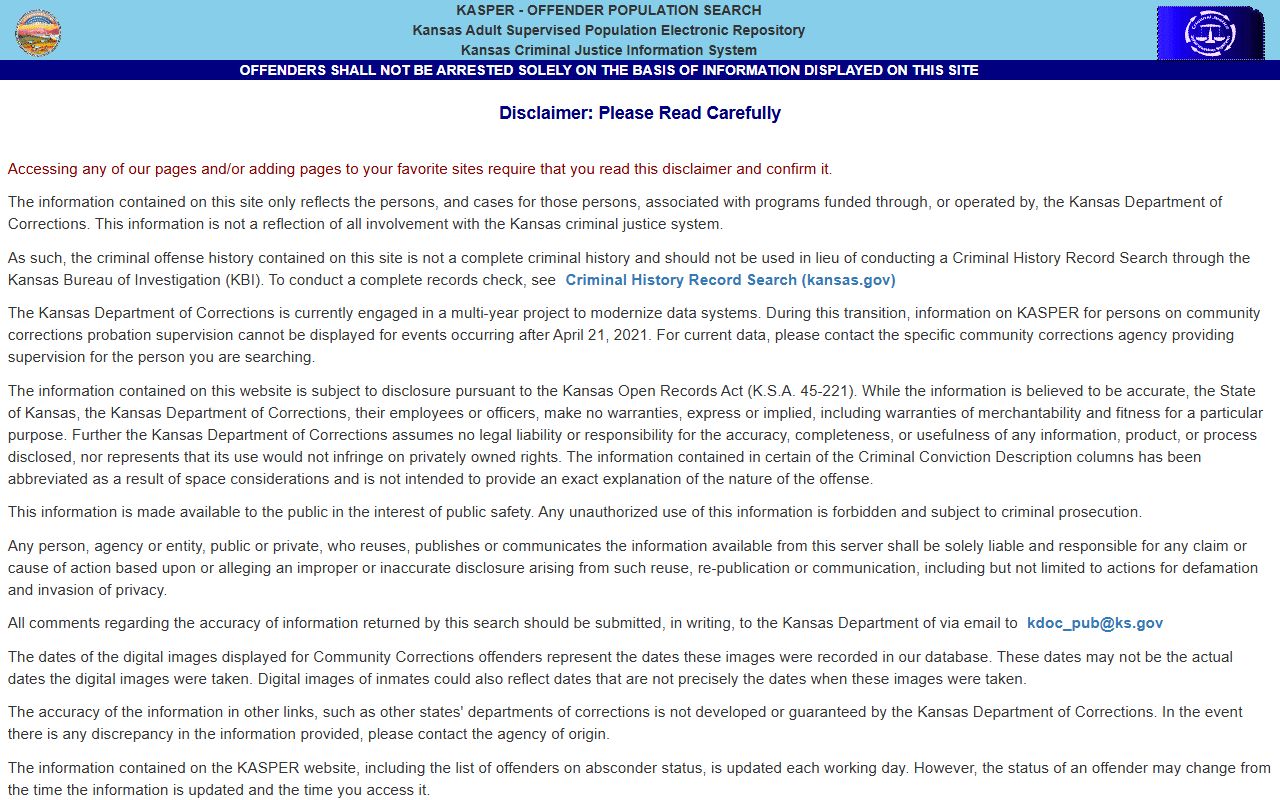
KASPER helps with state prison records, but it does not replace a county roster for a new jail booking or a county-held booking photo.
Find Kansas Booking Photos
The best first step is to find the holding facility. Rural Kansas makes this important because some county research files document regional custody paths. Gray County may point to Ford County Jail; Clark and Kiowa materials point to Meade County Jail; Gove and Logan materials document Thomas and Trego regional paths; and Barber County research points to Russell County Jail while Barber's sheriff office is not documented as an active public roster jail. A mugshot search can fail if it starts in the arrest county but the person is housed somewhere else.
- Start with the county or facility. Use the arrest county, the booking agency, Kansas VINE, or the County Directory to locate the right sheriff site.
- Open the current roster. Search by last name first, then first name, booking date, or booking number when available.
- Open the inmate profile. Many systems show the booking photo only after the profile is opened.
- Use a KORA request if needed. Ask the holding county sheriff for the booking photograph or booking record if it is not online.
- Check another system when custody changed. Use KASPER, BOP, ICE ODLS, or court records when the local jail record no longer answers the question.
Kansas Booking Photo Fields
A mugshot is usually only one field in a larger booking record. The surrounding details are just as important because they show whether the image relates to a current jail hold, a recent release, a warrant, a transfer, or a case that later changed in court. Roster entries are not convictions, and booking allegations may differ from the charges filed by the prosecutor.
| Field | What It Shows |
|---|---|
| Booking photo | The intake image taken by the jail or booking center, when the county publishes it. |
| Name and aliases | The roster name, and sometimes aliases or alternate spellings used by the jail. |
| Demographics | Age, sex, race, height, weight, or other descriptors when the system releases them. |
| Booking date | The jail intake date, which may differ from court filing dates. |
| Charges or holds | Arrest allegations, warrants, detainers, local holds, or filed charges depending on the system. |
| Bond or status | Bond, no-bond status, release, transfer, housing, or custody status when published. |
The Kansas VINELink state portal is a custody-status tool for participating county jail records and notification.
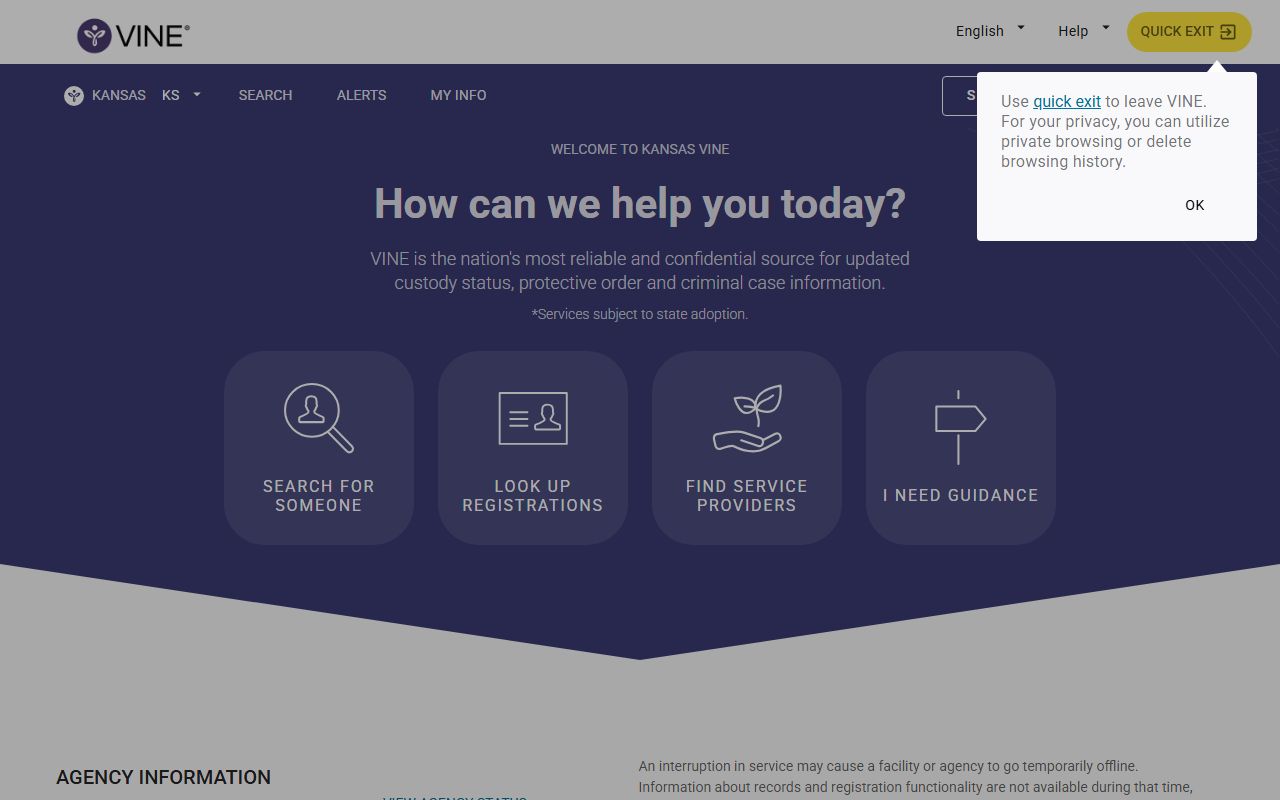
VINELink is not a mugshot gallery, but it can help confirm county jail custody before a user checks the local roster or sends a KORA request for a booking photo.
Are Kansas Mugshots Public?
Kansas booking photos are handled through the broader public-records framework rather than one statewide public mugshot portal. KORA, codified at K.S.A. 45-215 et seq., starts from the rule that public records are open unless another law permits or requires closure. K.S.A. 45-216 states that Kansas public records should be open for inspection unless otherwise provided by law, and K.S.A. 45-218 sets the agency response rule for records requests.
That does not mean every photo appears online or every request gets the same result. A county may remove photos after release, omit photos from its public roster, withhold exempt records, redact protected information, or require a formal request. Juvenile records, sealed records, expunged matters, medical or security details, and active investigation concerns can change the response. The public-record question should be sent to the county that holds or held the person because that county is the record custodian for the booking file.
Key Statutes:
K.S.A. 45-216 states Kansas public policy favoring inspection of public records unless another law controls access.
K.S.A. 45-218 requires public agencies to act on records requests as soon as possible and not later than the end of the third business day after receipt.
How Long Mugshots Stay
Kansas counties set their own public roster practices. Some rosters show only current inmates, so the photo disappears from public view after release. Others maintain recent-booking or recent-release reports for a short period. Some jail systems leave a profile visible for a longer window, while other sheriffs do not publish booking photos at all. The research does not support a single statewide retention period for county mugshots.
The custody system may also change. A person booked into a county jail can be released on bond, transferred to another county, sentenced to KDOC, moved to federal custody, or held under immigration detention procedures. Once custody moves, the county booking photo may no longer be the most current record, even if the old booking entry is still visible.
What is and isn't public: A public roster may show a booking image and basic custody fields, but sealed, juvenile, exempt, or nonpublished records may require direct contact with the official custodian.
Request Kansas Booking Photos
A records request for a booking photo should go to the county sheriff or jail records custodian that created or maintains the booking file. A good request names the person, date of birth if known, booking date or date range, booking number if known, arresting agency, and the record sought, such as the booking photograph or booking sheet. Ask for inspection or copies and include contact information for clarification.
KORA allows agencies to charge allowed costs and withhold exempt material. It also requires a timely response, not instant production. If the record belongs to KDOC instead of a county jail, use KDOC's GovQA process. If the person is in federal custody, county KORA will not produce a federal booking image. If the person is in immigration detention, ICE ODLS and the detention facility's official contact path are the proper starting points.
The KDOC GovQA KORA page describes the state corrections request process for Kansas Department of Corrections records.
KDOC contact information is helpful for state prison records, but county booking photos should still be requested from the sheriff or jail that created the local booking record.
Mugshot Removal and Expungement
Removing a Kansas booking photo from an official source is a records-custodian question, not a private reputation-service question. If a case was dismissed, expunged, sealed, or otherwise restricted by court order, the person should work from the court order and the agency that controls the public record. The related court record may need to be checked through court records after a jail arrest, because the jail booking entry and the criminal case can move on different timelines.
A dismissal does not automatically mean every public booking record vanishes from every county system. A roster may reflect a historical booking, while court records show dismissal, amendment, diversion, conviction, or expungement. Do not rely on commercial mugshot-publishing sites for official status or removal rules. The official path is the court order, the county sheriff or jail records unit, the clerk's public case record, and the custodian's KORA response.
The Kansas Case Search portal is the statewide starting point for many public district-court case records after arrest.
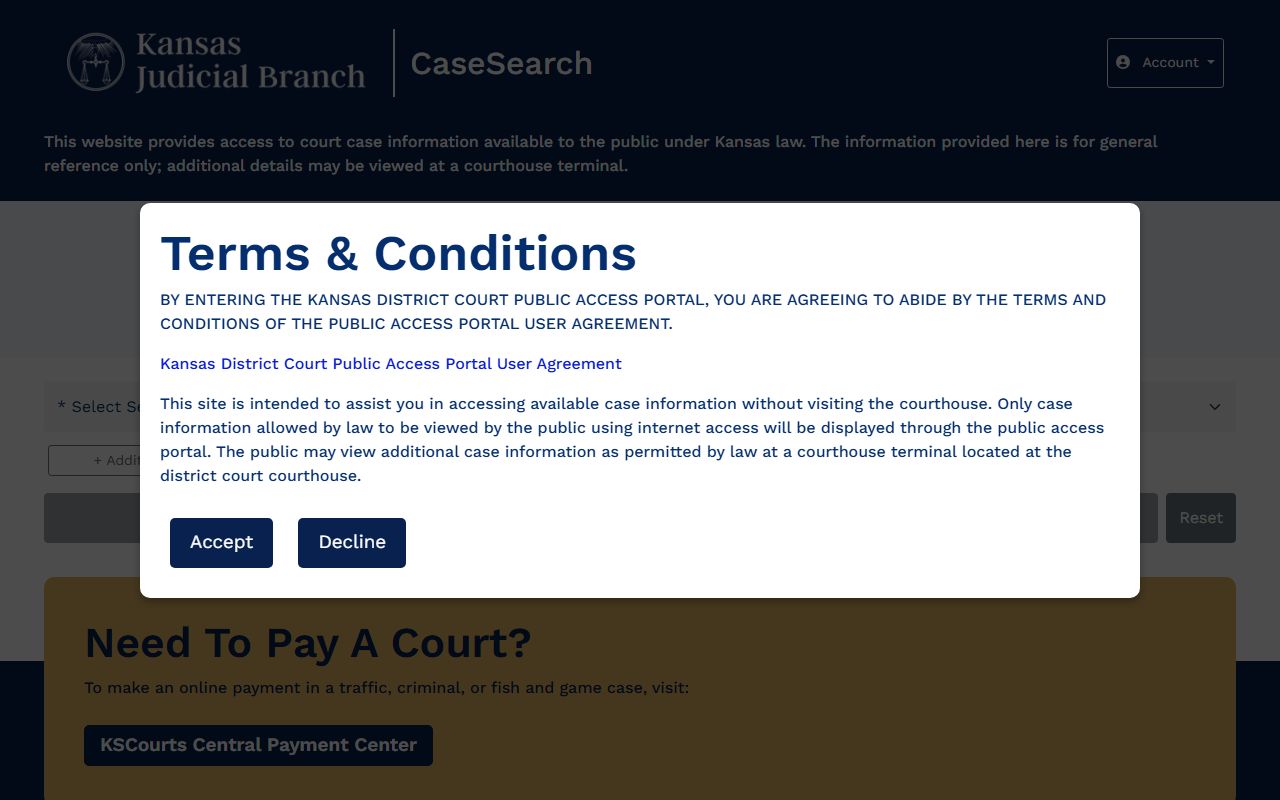
Case Search helps separate a booking allegation from a filed charge, dismissal, conviction, or expungement-related court action.
Federal and KDOC Photos
Federal custody does not work like a county jail roster. The Federal Bureau of Prisons locator can identify federal inmates incarcerated from 1982 to the present, but federal agencies generally do not operate a public county-style mugshot gallery. A federal prisoner with a Kansas connection may be at FCI Leavenworth or may be housed outside Kansas. That person will not be found in KASPER unless there is a separate KDOC sentence or supervision record.
ICE records are also separate. ICE ODLS is used for immigration detention, not ordinary county custody. A county jail may have an immigration hold note, but that does not prove the person is searchable in ICE ODLS at that moment. For state prison custody, KASPER is the statewide source. For county booking photos, use the holding county roster or a KORA request to the county record custodian.
| Photo Question | Likely Source | Important Limit |
|---|---|---|
| Current county booking photo | Holding county jail roster or sheriff records request | No single statewide county mugshot gallery exists. |
| State prison profile photo | KDOC KASPER | KASPER covers KDOC custody and supervision, not all arrests. |
| Federal prisoner image | BOP locator for custody data | BOP locator is not a mugshot publication system. |
| Immigration detainee custody | ICE ODLS | Use ICE and facility contacts rather than county assumptions. |
The BOP inmate locator is the federal custody search channel for Kansas-related federal prisoners.
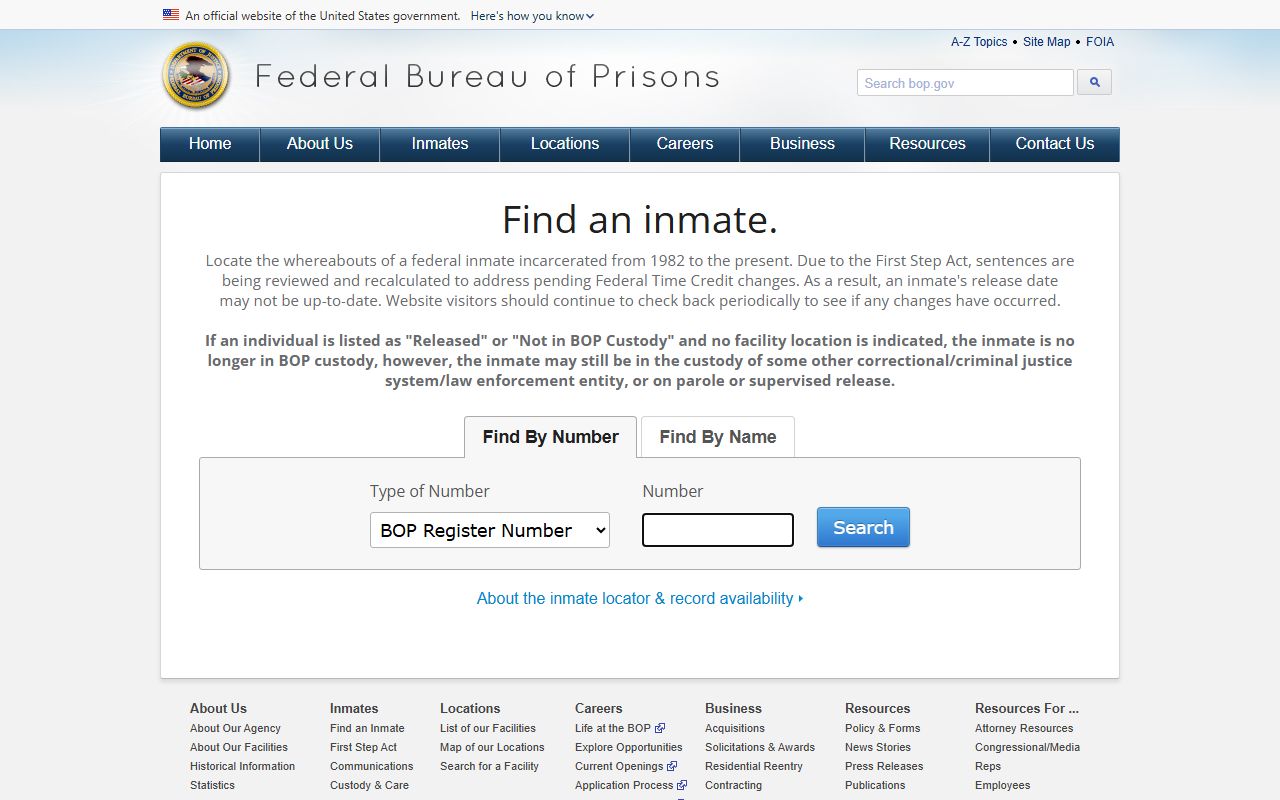
The federal locator is useful for custody status, but it should not be treated as a substitute for county booking-photo records.
Public Record Search
Sponsored Results