
How Kansas Inmate Records Work
Kansas does not operate one combined jail roster for all counties. County sheriffs run the local jails, publish local rosters when available, answer jail-status questions, and receive Kansas Open Records Act requests for the jail files they maintain. Those county records usually cover people booked after arrest, people held before trial, local-sentence inmates, municipal holds, warrant holds, and people waiting for transfer.
The Kansas Department of Corrections, usually shortened to KDOC, runs the statewide prison and supervision system. Its public locator is KASPER, the Kansas Adult Supervised Population Electronic Repository. KASPER is the right source for people sentenced to KDOC custody, people under post-incarceration supervision, parole or conditional release records, and discharged KDOC sentences. It is not a full Kansas criminal-history database, and it is not the first place to look for a person booked into a county jail earlier today.
Use the KDOC KASPER disclaimer and offender population search when the record should be in the state corrections system.
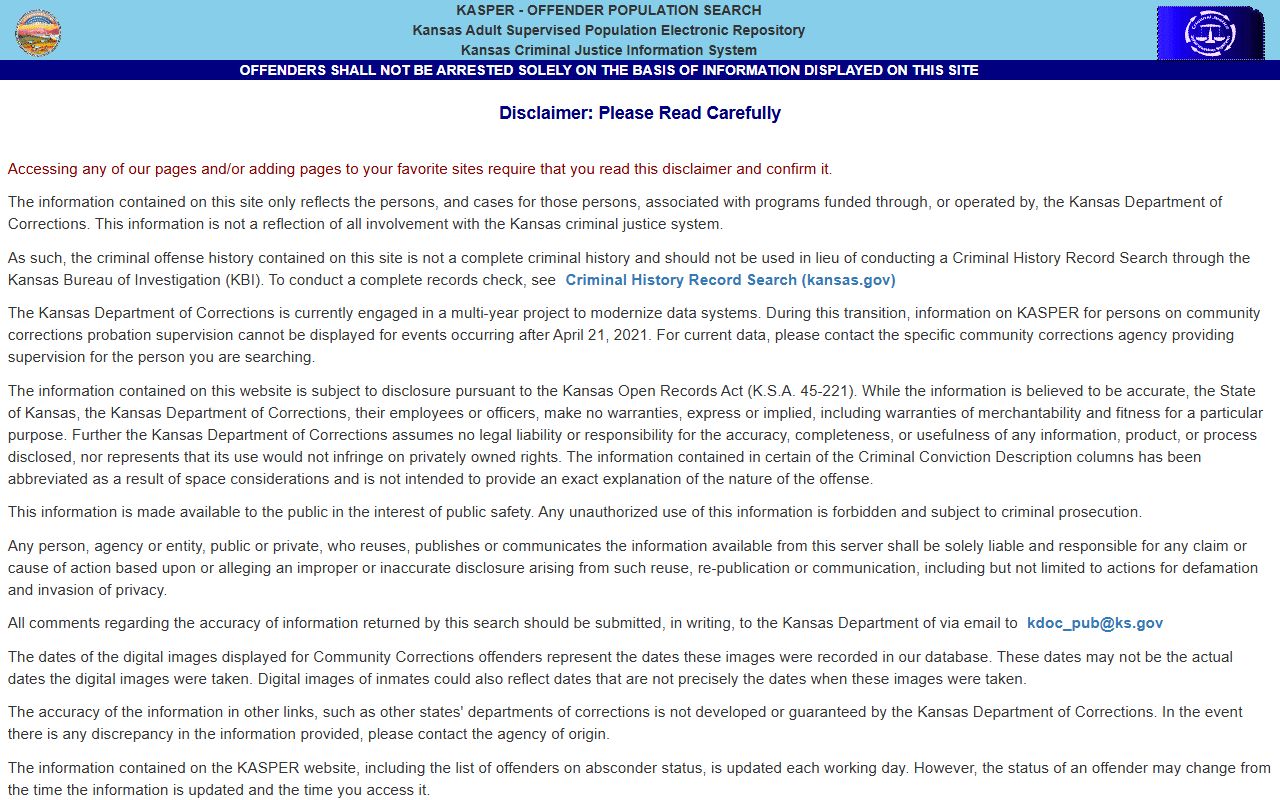
KASPER's warning matters because it limits the data to persons and cases tied to KDOC-funded or KDOC-operated programs and tells users not to make an arrest solely from the search result.
Find Kansas Jail Inmates
The fastest way to find a Kansas inmate record is to start with the custody question, not the person's home county. A person arrested in one county may be housed in a neighboring regional jail, especially in rural Kansas. Leavenworth County also shows why the custody system matters: the county has a sheriff detention center, Lansing Correctional Facility, FCI Leavenworth, military correctional facilities, and immigration-detention context. Each has a different search path.
- Check for KDOC custody. Use KASPER if the person has been sentenced to state prison, is on KDOC supervision, or may have a discharged KDOC sentence.
- Identify the holding county. For a fresh arrest or pretrial case, use the arrest county, the sheriff's booking report, Kansas VINE, or the statewide County Directory.
- Open the county roster. County systems may be live rosters, PDF reports, sheriff web pages, app-based feeds, or phone-only jail-status channels.
- Check federal or immigration custody. Use the BOP locator for federal prisoners and ICE ODLS for immigration detention.
- Use court records for filed cases. Kansas Case Search helps with filed district-court records, but it does not prove current custody.
When a county roster does not show the person, do not assume release. The person may be in a neighboring jail, moving between facilities, under a sealed juvenile matter, listed under a different name, held by federal authorities, or not yet entered in the public feed.
Kansas Custody Search Channels
Kansas inmate records are easier to read when each locator is treated as a separate channel. The county jail roster answers the short-term custody question. KASPER answers the KDOC prison and supervision question. BOP answers the federal custody question. ICE ODLS answers the immigration-detention question. Kansas VINE adds notification for county jail status changes, while Kansas Case Search answers the filed court case question.
| Custody | Run By | Where to Look |
|---|---|---|
| Recent booking, pretrial hold, local sentence | County sheriff or local jail | County jail roster, facility page, jail records unit, or Kansas VINE |
| State prison, parole, postrelease, discharged KDOC sentence | Kansas Department of Corrections | KASPER offender population search |
| Federal sentence or federal release status | Federal Bureau of Prisons | BOP inmate locator |
| Immigration detention | U.S. Immigration and Customs Enforcement | ICE Online Detainee Locator System and facility contact path |
| Filed criminal case after arrest | Kansas Judicial Branch | Kansas Case Search and district-court records access |
The Kansas Attorney General's Kansas VINE page describes VINE as a county-jail custody search and notification service.
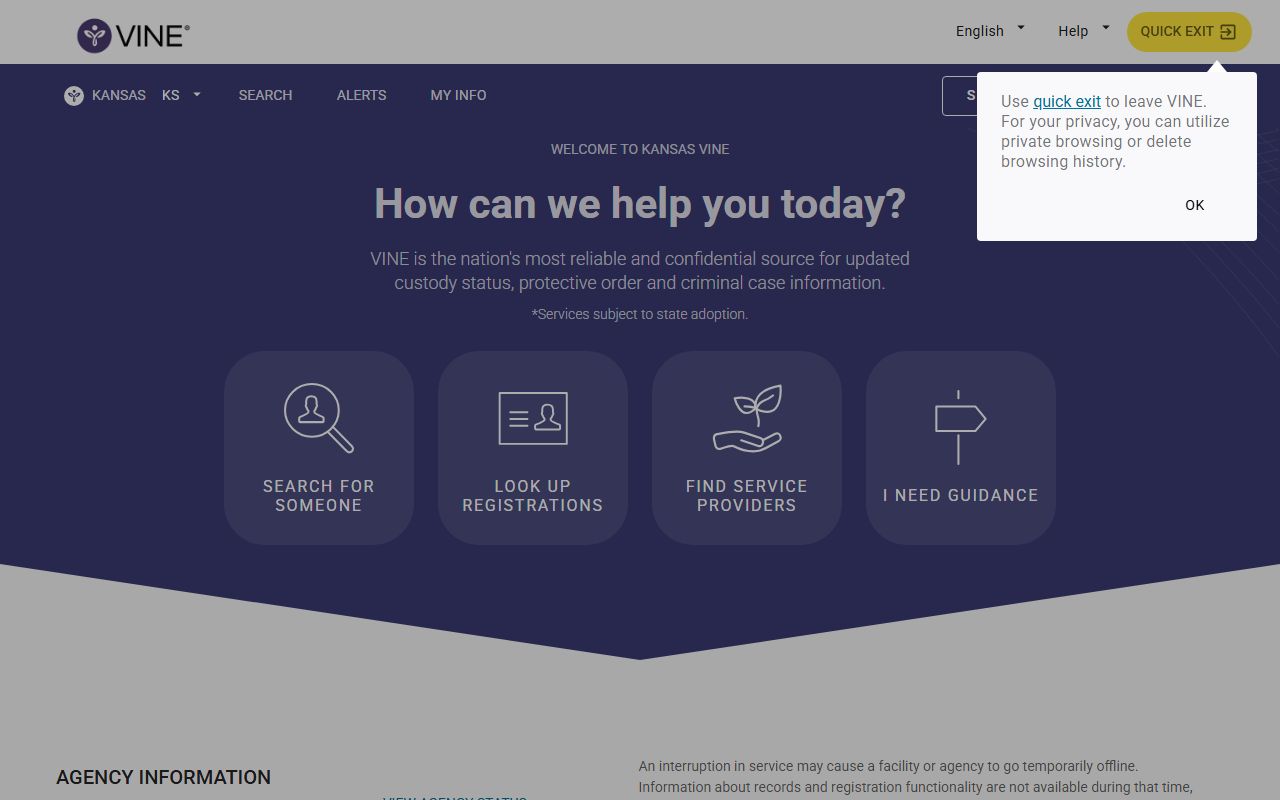
Kansas VINE is useful when the question is whether a person is housed in a county jail and whether custody status changes, but the Attorney General's material says it does not include KDOC offenders housed in state prisons.
Kansas Jail Roster Fields
County jail roster design varies across Kansas. Some counties publish current-inmate pages, some use vendor databases, some provide daily booking or release reports, and some require a phone call or a KORA request for details. The labels below describe the fields a searcher should expect to see across many Kansas county jail records, not a guarantee that every county publishes every field.
| Field Label | Type | Typical? | Notes |
|---|---|---|---|
| Last name | Text | Yes | Best first search term when spelling is known. |
| First name | Text | Common | Use with last name when the roster has many matches. |
| Booking number | Text or number | Common | County booking numbers are not KDOC registration numbers. |
| Booking date | Date | Common | Shows jail intake date, not the court filing date. |
| Facility | Dropdown or text | Varies | Important in counties with annexes, regional holds, or multiple jail buildings. |
| Charge or hold | Text | Common | May show arrest allegations, warrants, detainers, or filed charges. |
County roster data should be checked against court and agency sources before relying on it. A booking charge can change after the prosecutor reviews the case. A bond can change after a hearing. A person may be released from jail while the criminal case remains open.
Kansas Inmate Profile Details
A Kansas inmate profile is not the same record in every system. A county jail profile often focuses on booking facts and current local custody. A KASPER result can include a KDOC registration number, physical description, conviction description, county and case number, anticipated release date, housing location, movement history, supervision level, and institutional disciplinary record. KDOC's locating FAQ says the system is updated daily, excluding weekends, and includes offenders sentenced to the custody of the Secretary of Corrections since 1980.
| Field | What It Shows |
|---|---|
| Booking or KDOC number | The local jail booking identifier or the KDOC registration number used in KASPER. |
| Admission or booking date | When the jail received the person or when KDOC admitted the person to state custody. |
| Charges or conviction description | Arrest allegations on a jail roster or conviction information in a KDOC record. |
| Bond, sentence, or release date | Local bond data, sentence status, or an anticipated release date that may change. |
| Facility or housing | The jail, state institution, parole office, or movement history shown by the system. |
| Custody status | Current custody, release, discharge, parole, postrelease, absconder, or other supervision status when available. |
The KDOC locating FAQ gives the official Kansas explanation of KASPER's fields and update pattern.
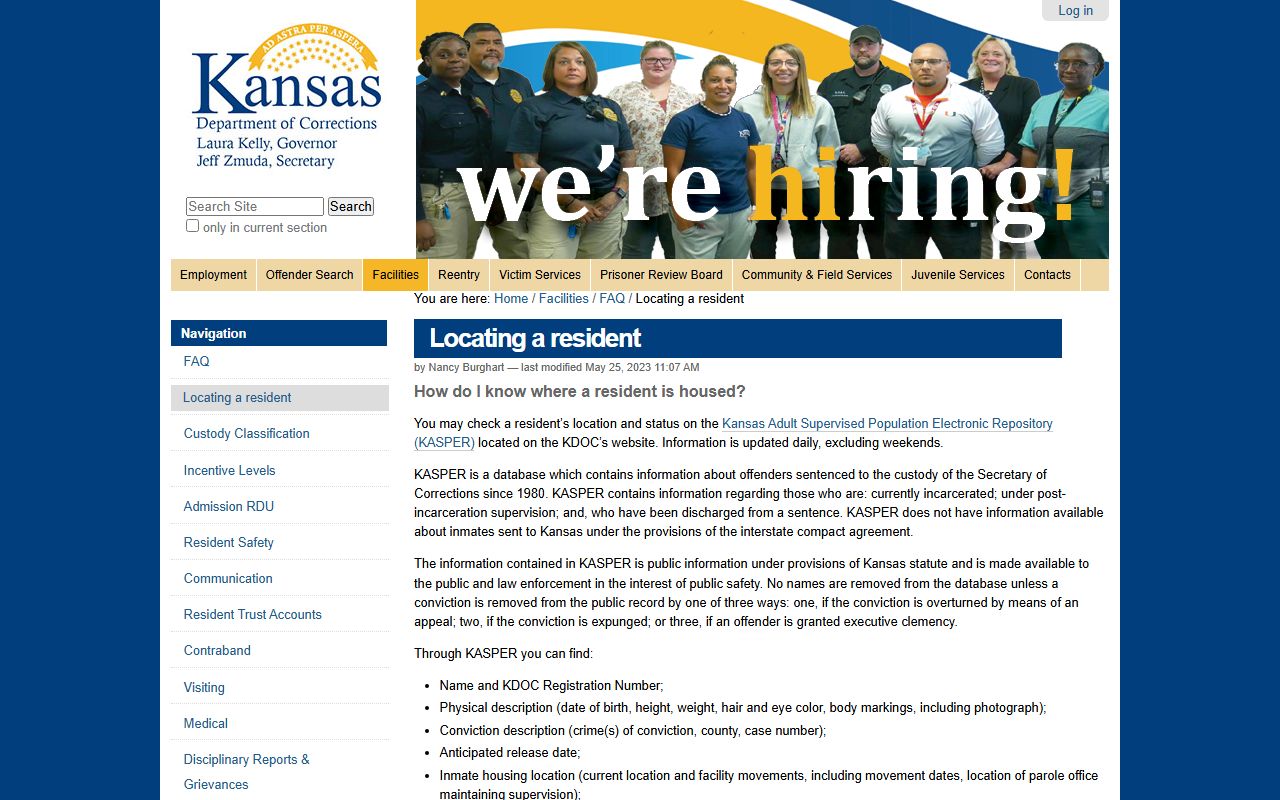
The FAQ is especially useful for release-date questions because it explains that dates depend on good-time and program-credit earnings or forfeitures and may require sentence-computation contact for exact answers.
Kansas Detention Facilities
Kansas inmate records can point to county jails, booking centers, juvenile detention centers, KDOC prisons, work-release facilities, federal prisons, military correctional facilities, ICE-related facilities, and regional custody paths. The statewide facility roll-up covers all 105 county folders and de-duplicates regional facilities documented in multiple county research files. It also preserves rows that are not ordinary adult jails, such as holding-transfer points, work-release annexes, and juvenile detention centers.
Browse the full Kansas Facility Directory →
For state prison records, the KDOC facilities map identifies correctional-facility cities and parole-office cities across Kansas.
The map reinforces the statewide point: state custody can move across Kansas, while county jail custody stays tied to the sheriff or regional facility that holds the person.
Visits, Mail, and Funds
Visitation, mail, phone calls, tablets, video visits, and commissary deposits are set facility by facility. A Kansas county jail may use a sheriff lobby schedule, a vendor video system, a mail-scanning vendor, or a detention-center rule page. KDOC facilities have their own state prison rules and institution pages. Federal and immigration facilities have separate contact paths and security requirements.
Confirm custody before sending money or scheduling a visit. A person may appear in a county booking record but be moved to KDOC, BOP, another county jail, or an ICE path before a visit date. Facility rules may also change for classification, discipline, medical restrictions, court transport, lockdowns, or vendor outages.
Note: Facility-specific visit hours, mail formats, and deposit vendors must be confirmed with the holding jail or prison before acting.
KORA Inmate Record Requests
Kansas public-records access is governed by the Kansas Open Records Act, commonly called KORA. K.S.A. 45-216 states the public policy that records are open unless otherwise provided by law. K.S.A. 45-218 requires an agency to act on a request as soon as possible, but not later than the end of the third business day after receiving it. That deadline is a response rule, not a promise that every record will be released by the third business day.
For jail records, send the request to the county sheriff, jail administrator, or local records custodian that maintains the record. For KDOC records, use the KDOC GovQA KORA request process or the written and email options described by KDOC. A request should identify the person's full name, date of birth if known, booking or KDOC number if known, facility, date range, and the exact records sought. Agencies may charge allowed costs, withhold exempt material, or ask for clarification.
The Federal Bureau of Prisons inmate locator is the correct national channel for federal prisoners from 1982 to the present.
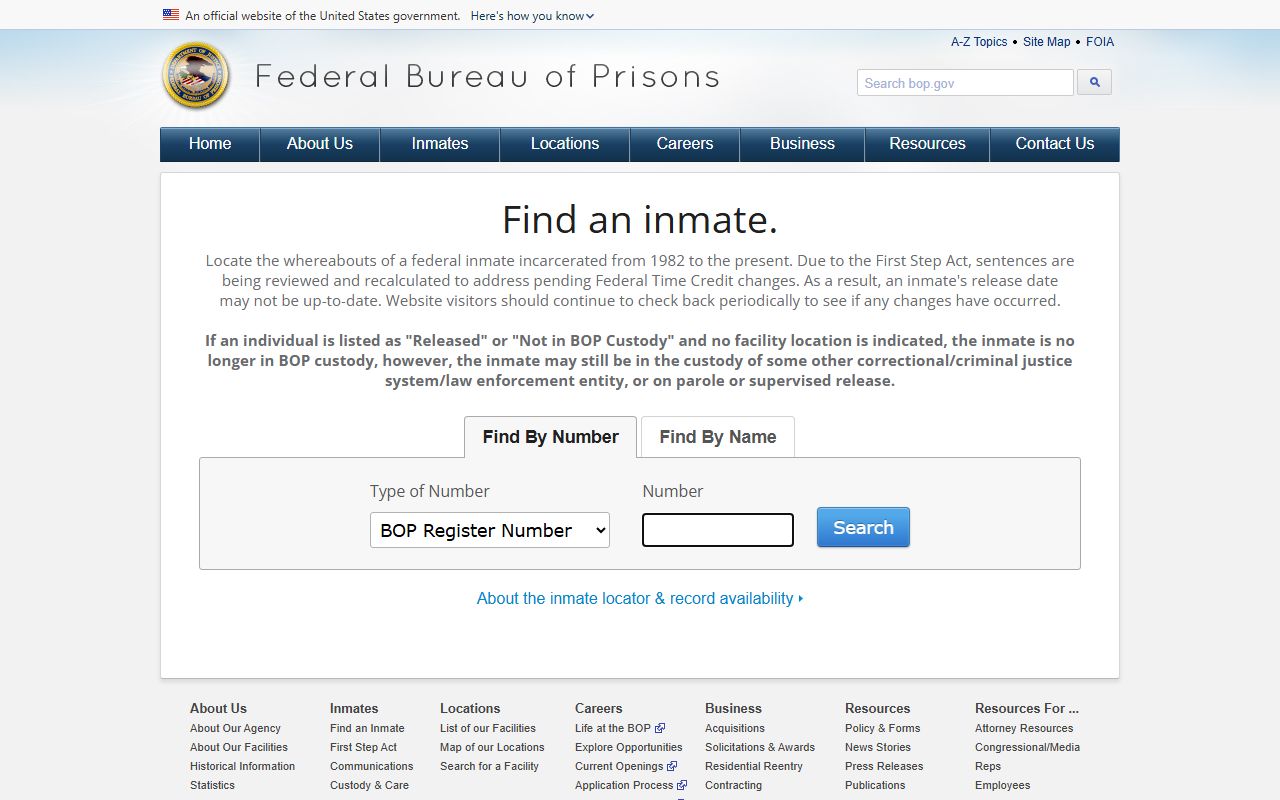
BOP records should not be confused with KDOC or county jail records, since a federal release listing may still leave a person under another correctional or law-enforcement system.
Public Record Search
Sponsored Results